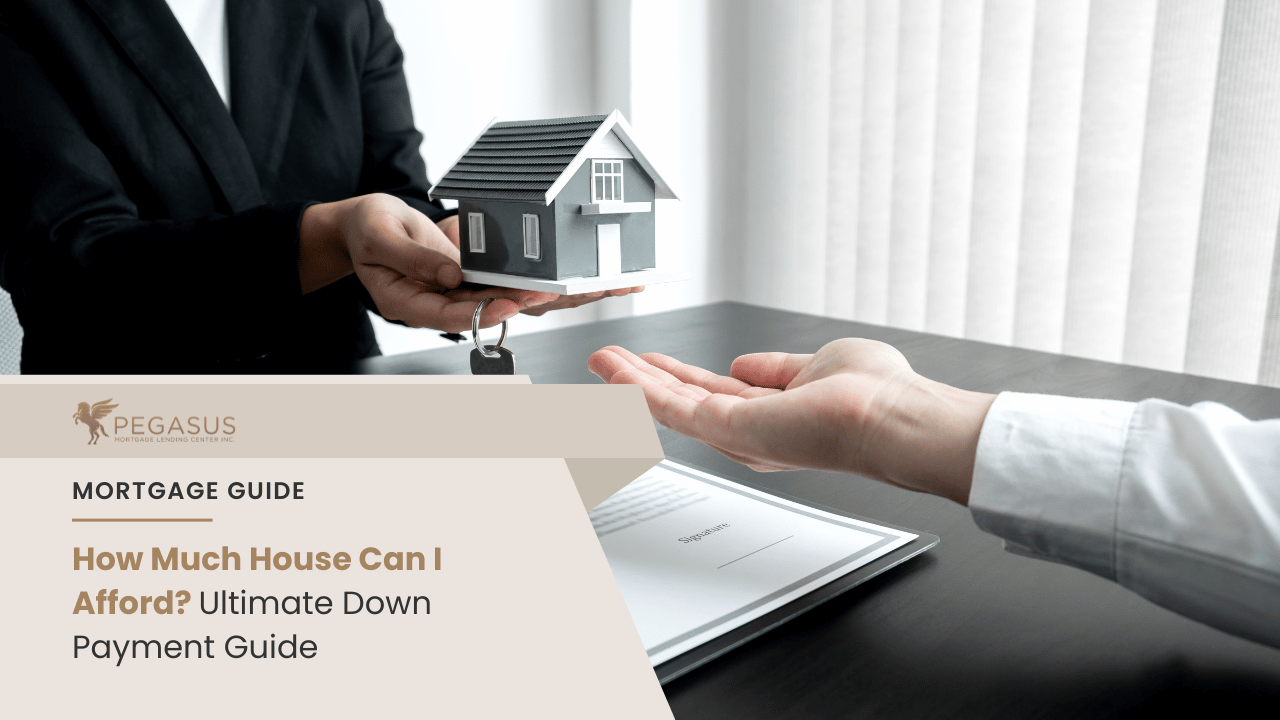
When you start thinking about buying a home, one question usually comes first: how much house can I afford? Almost immediately, it leads to another equally important question—how much should I save for a down payment?
In 2026, these two questions are closely connected. Your down payment doesn’t just affect the price range you can shop in. It also shapes your monthly payment, interest rate, mortgage insurance costs, and overall financial comfort. Before you apply for a loan, understanding how down payments work is one of the smartest moves you can make.
This guide walks you through down payments in today’s U.S. housing market—what they are, why they matter, how they affect affordability, and what realistic options exist for buyers in 2026. By the end, you’ll move from asking “how much house can I afford?” to understanding how to answer it with confidence.
What Is a Down Payment (and Why It Matters)
A down payment is the portion of a home’s purchase price that you pay upfront at closing. The remaining amount is financed through your mortgage.
For example, if you purchase a $400,000 home and make a $40,000 down payment, you finance the remaining $360,000.
Your down payment matters because it directly affects three major parts of your mortgage:
- Your loan amount: A larger down payment means you borrow less, which typically lowers your monthly payment.
- Your interest rate: Buyers who put more money down are often seen as lower risk, which can translate into better rates.
- Mortgage insurance: If you put less than 20% down on most loans, you’ll usually pay private mortgage insurance (PMI), which increases your monthly cost.
Your down payment doesn’t just get you in the door—it influences how affordable the home feels long after closing.
How Much House Can I Afford? The Role of Your Down Payment
Many buyers focus only on what a lender will approve them for. But how much house you can afford is about more than approval—it’s about sustainability.
Affordability is shaped by several factors working together:
- Income
- Monthly debts
- Credit score
- Interest rate
- Down payment amount
- Property taxes and insurance
- Loan type
Here’s the reality: you can often qualify for more house than you should buy. Lenders rely on debt-to-income ratios, but your personal comfort level should also account for emergency savings, retirement goals, and day-to-day lifestyle needs.
Your down payment plays a major role in how far you stretch your budget. Let’s look at what that means in real numbers.
Common Down Payment Scenarios in 2026
There’s no single “right” down payment, but these benchmarks are common in today’s market.
20% Down
Putting 20% down is often considered the gold standard.
Example:
- Home price: $450,000
- Down payment: $90,000
- Loan amount: $360,000
Benefits typically include no PMI, lower monthly payments, and a stronger negotiating position.
10% Down
Many conventional loan programs allow 10% down.
Example:
- Home price: $450,000
- Down payment: $45,000
- Loan amount: $405,000
With less than 20% down, PMI usually applies, and monthly payments are higher than with a larger down payment.
5% Down or Less
Some programs allow as little as 3–5% down, especially for first-time or qualified buyers.
Example:
- Home price: $450,000
- Down payment: $22,500
- Loan amount: $427,500
This lowers the upfront barrier to homeownership but often comes with PMI and slightly higher interest rates.
If saving 20% would delay buying for years, a smaller down payment may be reasonable—if the monthly payment still fits comfortably.
How Down Payment Size Changes Your Monthly Payment
Two buyers can ask the same question—“how much house can I afford?”—and get very different answers based on their down payment.
Assume both buyers purchase a $450,000 home at the same interest rate.
20% down:
- Down payment: $90,000
- Loan amount: $360,000
- Lower monthly payment, no PMI
5% down:
- Down payment: $22,500
- Loan amount: $427,500
- Higher monthly payment plus PMI
That difference can easily be hundreds of dollars per month. In tight budget situations, it may determine whether a buyer qualifies—or feels financially stretched.
Low Down Payment Loan Options in 2026
If saving a large down payment feels out of reach, several loan programs can help buyers purchase sooner.
FHA Loans
FHA loans allow down payments as low as 3.5% for qualified borrowers and offer more flexible credit requirements. Mortgage insurance is required.
VA Loans
Eligible veterans, active-duty service members, and certain spouses may qualify for VA loans with zero down payment and no PMI.
USDA Loans
USDA loans are designed for eligible rural and suburban areas and may offer low or no down payment options, subject to income and location limits.
Conventional 97 Loans
Backed by Fannie Mae and Freddie Mac, these loans allow as little as 3% down, though PMI typically applies until sufficient equity is built.
Low down payment programs expand what “how much house can I afford” can mean—but understanding the trade-offs is essential.
How to Save for a Down Payment in 2026
Saving for a down payment is a process, not a sprint. A clear plan makes it manageable.
- Set a realistic target: Run numbers for 5%, 10%, and 20% down to understand your options.
- Automate savings: Automatic transfers to a dedicated account reduce friction.
- Pay down high-interest debt: This frees cash flow and strengthens your loan profile.
- Use extra income strategically: Bonuses, tax refunds, or side income can accelerate progress.
- Understand gift funds: Many loan programs allow gifts from family, as long as they’re properly documented.
Final Thought: Your Down Payment Shapes Your Affordability
When buyers ask “how much house can I afford?” they often focus only on price and approval limits. Your down payment strategy plays an equally important role. It affects your monthly payment, loan options, long-term costs, and financial flexibility.
In 2026, buyers have more paths to homeownership than ever. Whether you aim for 20% down or choose a low-down-payment program, understanding the trade-offs helps you buy with confidence.
Ready to Plan Your Down Payment With Confidence?
Knowing how much house you can afford starts with a clear down payment strategy. At Pegasus Lending, we help buyers understand their options, run real payment scenarios, and build a plan that aligns with their goals.
We can help you with:
- Down payment calculations
- Savings strategies
- Loan program eligibility
- Monthly payment projections
- 2026 affordability planning
Stop guessing. Get clarity. Contact a Pegasus Lending specialist <Button> today and find out how much house you can truly afford.