
If you’re watching the Tampa Bay housing market in 2026, it probably feels like you’re getting mixed signals.
You’re seeing more price cuts, listings sitting longer, and buyers negotiating again. But you’re also hearing, “Florida is expensive,” and wondering if waiting means higher payments—or missing the right home.
Here’s the calming truth: this market doesn’t need to be “booming” or “crashing” for you to make a smart move. A market can simply shift toward balance—where strategy matters more than speed—and that’s often where better decisions happen.
Quick start: pick your path
Use this checklist to jump to what matters most.
If you’re buying a home in Tampa Bay
☐ Check whether inventory and days on market are rising (that’s where leverage shows up)
☐ Get pre-approved before you tour seriously
☐ Ask about seller concessions (closing costs, rate buydowns, repairs)
☐ Keep inspection/appraisal protections unless there’s a strong reason not to
If you’re selling
☐ Price to today’s competition (not last year’s headlines)
☐ Expect buyers to negotiate—plan for it
☐ Prep for longer market time and more showings
☐ Have a backup plan (renting, timing flexibility, or price-adjustment triggers)
If you’re relocating or refinancing
☐ Compare your “golden handcuff” rate to today’s rates
☐ Run a payment + cash-to-close scenario
☐ Consider temporary strategies (rate buydown, ARM options, larger down payment)
What “shifting” looks like in real life
When people say a market is “shifting,” they usually mean a few practical changes you can actually feel:
- Homes take longer to sell (less frenzy)
- Buyers get more choices (more inventory)
- More price reductions and concessions (negotiation returns)
- Price growth cools—or becomes more uneven by neighborhood
In Tampa Bay, several of these signals show up in the most recent Realtor.com data published via the St. Louis Fed (FRED).
A 2026 snapshot: Tampa Bay’s latest market signals
These three consumer-friendly indicators help answer a simple question: Is the Tampa Bay market changing?
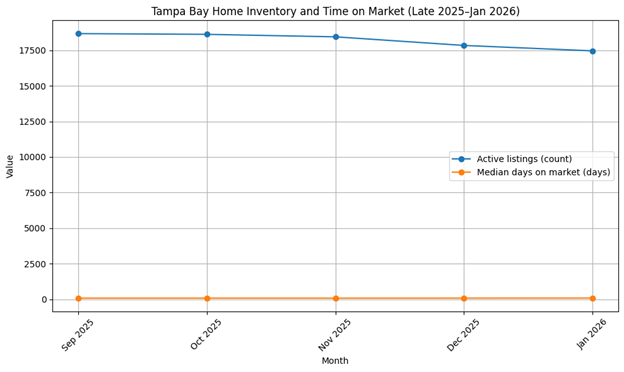
1) Inventory is higher than it was during the frenzy years
Active listing count for the Tampa–St. Petersburg–Clearwater area was 17,462 in January 2026, with recent months hovering in the high 17k–18k range.
What that means: when buyers have choices, they don’t have to panic-offer on the first decent home.
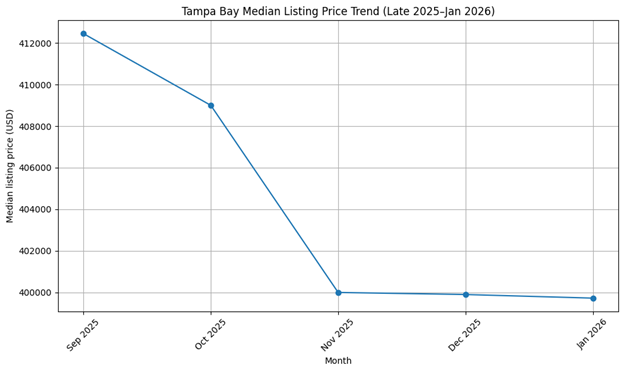
2) Listing prices look flatter lately
The median listing price in the Tampa–St. Petersburg–Clearwater area was $399,727 in January 2026, roughly in line with late-2025 readings.
Important note: median listing price isn’t the same as final sale price—but it’s a useful directional signal.
3) Homes are taking longer to move
Median days on market was 85 days in January 2026, up from the high-70s in recent months.
What that usually means: more negotiating room, fewer bidding wars, and more time to do your due diligence.
Mortgage rates: still the biggest “feel it in your payment” factor
Even if prices cool, your payment can still feel high if rates stay elevated.
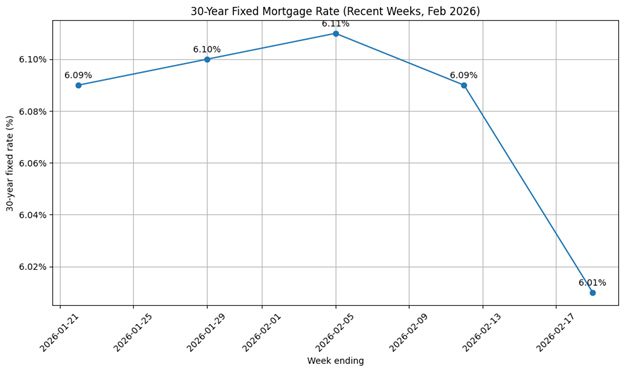
Freddie Mac’s weekly survey (also published on FRED) put the average 30-year fixed rate at 6.01% on February 19, 2026, after sitting around 6.09%–6.11% in the prior few weeks.
Bottom line: rates are still the biggest reason many buyers feel cautious—and why sellers are often more open to concessions than they were during the peak frenzy.
What’s driving Tampa real estate trends in 2026?
Markets usually shift because multiple gears move at once. Here are the big ones to watch—without the jargon.
More listings changes buyer behavior
When inventory rises, buyers stop feeling like they must “win at all costs.” In practice, that often means:
- more inspection requests
- more repair negotiations
- more offers below list (or with concessions)
You don’t need a dramatic price drop for the experience to feel different. You just need options.
Prices are acting more “local” again
In fast-growth years, almost everything moves together. In a cooler phase, neighborhood differences matter more:
- School zones, flood risk, HOA rules, and insurance costs can create big pricing gaps.
- Homes that are updated and well-priced still move.
- Homes that feel overpriced can sit.
New construction adds competition
Building permits aren’t a perfect “supply” measure, but they’re a useful clue about new homes coming online.
For the Tampa–St. Petersburg–Clearwater MSA, permits (all structure types) were around 2,352 (seasonally adjusted) in October 2025, with recent months bouncing between roughly 1,900 and 2,460.
Translation: buyers may keep seeing more “new home” options competing with resale listings—which can pressure resale sellers to be flexible.
Property taxes and homestead rules matter in Florida
If you’re buying (or moving within Florida), it’s smart to understand two concepts:
- Homestead exemption: a property tax benefit for many primary-residence homeowners.
- Save Our Homes: limits how much the assessed value of a homesteaded property can increase each year.
Why it matters in a shifting market: if you buy a home that was homesteaded by the prior owner for many years, your assessed value (and taxes) may reset closer to market value after purchase. That’s not “good” or “bad”—it’s just something to plan for.
Tampa Bay market outlook 2026: what it means if you’re buying
If you’re buying a home in Tampa Bay this year, your advantage is less about “timing the bottom” and more about using leverage wisely.
Buyer tips that actually work
Try this mini-playbook:
- Shop payment-first, not price-first. Ask your lender for scenarios: higher down payment vs. smaller down + seller concessions vs. a temporary rate buydown.
- Ask for concessions early. In a softer market, sellers may help with closing costs, repairs/credits, or buydowns. Your agent and lender can coordinate how this is structured.
- Keep your protections. Inspection and appraisal contingencies protect you from expensive surprises. In a shifting market, you often don’t need to waive them.
- Use days on market as your negotiation map. A home sitting longer than similar listings is often your cue to negotiate harder—especially if there have been price drops.
How to think about forecasts (without over-trusting them)
Forecasts are educated estimates—not promises. Treat them like a weather report:
- helpful for planning
- not something to base your entire life on
What it means if you’re selling in 2026
A shifting market doesn’t mean you can’t sell well. It means you need to sell like it’s 2026, not 2021.
Seller priorities in a more balanced market
- Price to your competition, not your memory. Buyers compare your home to what else they can buy this week.
- Condition matters more. Small issues can become bargaining points when buyers have choices.
- Plan for negotiation. Concessions and credits may be part of the deal.
- Set clear decision triggers. Example: “If we don’t get serious offers in 21 days, we’ll adjust price by X.”
Common mistakes to avoid
Buyer mistakes
- Falling in love before running the payment
- Touring without pre-approval and losing the home you actually want
- Over-focusing on list price and ignoring insurance, HOA, taxes, and maintenance
- Waiving inspections when you didn’t need to
- Assuming every neighborhood is shifting the same way
Seller mistakes
- Overpricing “just to try” (often backfires and leads to bigger cuts later)
- Ignoring the first 2–3 weeks (your listing is freshest then)
- Not accounting for buyer leverage (concessions, repairs, credits)
- Taking a low offer personally instead of countering strategically
Step-by-step roadmap: a calm plan for buying or selling in Tampa Bay
If you’re buying
- Define your payment comfort zone (not just your max approval)
- Get fully pre-approved (documented, not just a quick estimate)
- Pick 2–3 target areas (commute + lifestyle + flood/HOA/insurance considerations)
- Tour with a negotiation lens (days on market, price changes, condition)
- Structure a smart offer (price + protections + concessions strategy)
- Do inspections and renegotiate if needed
- Lock your rate when it fits your plan (your lender can explain tradeoffs)
- Re-check total monthly cost before final sign-off (tax/insurance/HOA estimates can change)
If you’re selling
- Pull the most relevant comps (same area, similar size, ideally last 60–90 days)
- Choose a pricing strategy (market price vs. “create competition” price)
- Prep for first impressions (repairs, cleaning, basic staging)
- Launch strong (photos, showing availability, clear disclosures)
- Track the first 10–14 days closely (showings and feedback)
- Negotiate with a plan (credits can be cheaper than price cuts)
- Adjust if needed (based on data, not frustration)
FAQ
Is the Tampa Bay housing market 2026 “crashing”?
A shift isn’t automatically a crash. Recent data points look more like a cooler, more negotiable market—more time on market, steadier listing prices, and higher inventory.
Are Tampa home prices going down in 2026?
Some indicators show softer pressure (like flatter median listing prices lately), but direction can vary a lot by neighborhood and property type.
Does higher inventory mean buyers will get huge discounts?
Not always. More inventory usually means more choices and more negotiating power—not guaranteed “steals.” The best-priced, best-presented homes can still move quickly.
Should I wait for mortgage rates to drop?
Rates change for many reasons, and nobody can promise the direction. What you can control is your budget, your down payment, and how you structure an offer (including possible seller concessions).
Does Florida’s homestead benefit apply automatically when I buy?
Rules vary by county and situation, but generally you must apply (often through your county property appraiser) and meet eligibility rules.
Can my property taxes jump after buying?
They can, because assessed values may reset after a purchase. That’s why homestead and Save Our Homes rules are important to understand when estimating future taxes.
Is new construction a better deal right now?
Sometimes—especially if builders offer incentives. Compare total costs (HOA, possible CDD fees, commute, and long-term resale) and make sure contract terms are clear.
A quick reminder before you act
This article is educational, not financial, legal, or tax advice.
Your best next step is simple: run a personalized scenario (payment, cash-to-close, and options like concessions or buydowns) before you make a big decision.
If you’d like help, we can compare a few “buying a home in Tampa Bay” scenarios side-by-side—so you can move forward confidently, whether the right move is now or later.