

The housing market is no longer moving in one direction. After years of intense bidding wars and limited inventory, more metros across the U.S. are seeing listings pile up, homes sit longer, and sellers adjust expectations.
For Florida buyers, this shift matters. More inventory can translate into negotiation leverage—repair credits, seller concessions, and calmer timelines. But a buyer-friendlier housing market does not automatically mean “cheap.” In higher-priced metros like Miami, inventory can rise while prices remain elevated.
This guide breaks down what’s changing in the housing market, how Florida fits into the trend, and a practical step-by-step roadmap to buy confidently in 2026.
Quick explainer on mortgage strategy and negotiation timing: Watch here
What’s Changing in the Housing Market Right Now
Across the U.S., supply has been rebuilding—though not evenly.
Recent reporting from Realtor.com indicates:
- Active listings up roughly 10% year over year in early 2026
- Homes spending more time on the market
- About 3% of listings nationally showing price reductions in January 2026
When you combine:
- More homes for sale
- A slower contract pace
- Frequent price reductions
…you begin to see conditions shift toward a more balanced—or even buyer-leaning—housing market.
For national housing data and trend reporting, see Realtor.com Research: See here
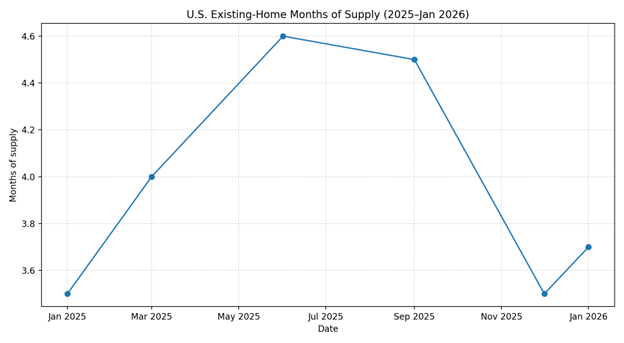
Key takeaway: The housing market isn’t crashing. It’s normalizing as supply increases and buyers become more selective.
Buyer’s Market vs Balanced vs Seller’s Market (In Plain English)
One of the simplest ways economists describe real estate supply and demand is “months of supply.”
It answers one question:
At today’s sales pace, how long would it take to sell all current listings?
Common rule of thumb:
- Under 4 months: Seller-leaning market
- 4–6 months: Balanced market
- Over 6 months: Buyer-leaning market
Here’s the nuance:
A buyer’s market usually means more negotiating leverage—not automatic affordability.
You may gain room to request:
- Inspection-based repairs
- Seller-paid closing costs (where allowed)
- Flexible closing timelines
- Contract protections instead of waiving contingencies
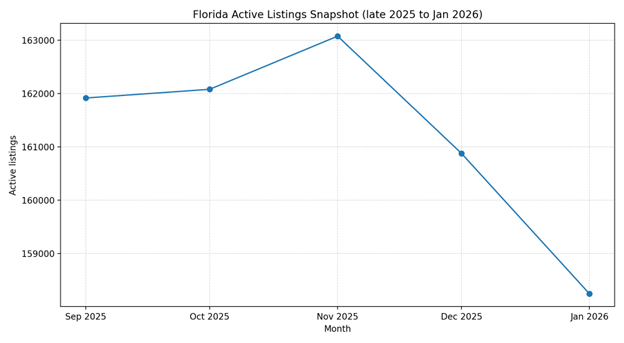
Florida: Where the Buyer-Friendly Shift Is Showing Up
The housing market in Florida illustrates how local this shift can be.
Metro-level analysis from Realtor.com previously showed Miami reaching approximately 11.5 months of supply by late 2025—placing it among the strongest buyer-leaning markets at that time.
Other Florida metros—including Orlando, Jacksonville, and Tampa—have crossed the 6+ months threshold during parts of 2025.
State-level data tracked through the Federal Reserve’s FRED database (sourced from Realtor.com) showed elevated active listings compared with the tightest pandemic-era years.
For Florida listing data, see FRED (Federal Reserve Economic Data): See Here
What This Means for Florida Buyers
You may have more leverage on terms, not just price.
When inventory rises, sellers often become more flexible on:
- Repair credits after inspection
- Seller concessions (if loan guidelines allow)
- Closing date adjustments
- Maintaining contract protections
But payment comfort still matters. A buyer-friendly housing market can improve your deal structure—but it doesn’t eliminate affordability constraints.
Why Listings Are Piling Up in More Metros
The housing market shift isn’t caused by one single factor.
1. Buyers Are More Cautious
Redfin has reported homes taking longer to go under contract and softer pending sales activity in early 2026—signs that buyers are evaluating more carefully.
2. Sellers Still Need to Move
Life events continue:
- Job relocations
- Family changes
- Downsizing or retirement
Even in higher-rate environments, listings continue to enter the housing market.
3. The Market Is Normalizing From Extreme Scarcity
Inventory has risen compared with the historically tight conditions of 2020–2022. But the impact varies by neighborhood, property type, and price band.
Decision checkpoint: Don’t assume your entire city is buyer-friendly. Micro-markets behave differently.
What This Means for Your Buying Strategy in Florida
If you’re shopping in a buyer-leaning pocket of the housing market, focus on smart leverage—not aggressive lowballing.
Aim Your Leverage Where It Counts
Moves that often matter more than a small headline price cut:
- Inspection strategy: Keep inspection protections and negotiate based on real findings.
- Seller concessions: Credits may reduce cash-to-close or cover allowable costs.
- Price vs condition: Overpriced homes sit. Well-priced homes still move.
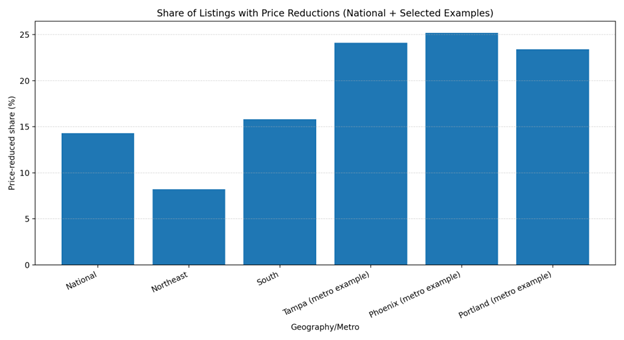
Watch for Price Reductions
Nationally, about 14.3% of listings showed price cuts in January 2026. Some Florida metros were cited among those with higher shares of price-reduced listings.
A price reduction can signal motivation—especially when paired with longer days on market.
Common Mistakes Buyers Make in a Shifting Housing Market
Even with improving leverage, buyers can lose their edge.
- Treating “buyer’s market” as a guarantee. Conditions vary by home type and location.
- Falling in love before running numbers. Affordability remains critical in 2026.
- Shopping without real pre-approval. Strong offers are backed by clean documentation.
- Focusing only on purchase price. Credits, repairs, and protections often matter more.
- Waiving safeguards unnecessarily. If leverage exists, use it wisely.
Step-by-Step Roadmap to Buy Confidently in Florida
1. Define Your Monthly Comfort Zone
Set both:
- A maximum payment
- A “comfortable” payment
Shop based on the comfortable number.
2. Gather Documentation Early
- Recent pay stubs
- W-2s or tax returns
- Bank statements
- Identification
- Documentation for large deposits
3. Get a True Pre-Approval
- A real pre-approval involves reviewed documentation and a financing strategy aligned with your contract timeline.
4. Tailor Strategy to Market Speed
- Slower segments: Target stale listings and price reductions.
- Faster segments: Move quickly on well-priced homes.
5. Make a Clean Offer Using Leverage Wisely
- Maintain inspection terms
- Request appropriate concessions
- Use timeline flexibility when helpful
6. Protect Your Financing During Underwriting
Avoid:
- New credit accounts
- Large unexplained purchases
- Major asset shifts
7. Final Walkthrough and Closing
- Confirm negotiated repairs (if applicable) and overall condition before signing.
The Bridge: Why Professional Guidance Matters in Today’s Housing Market
A headline about the national housing market doesn’t account for:
- Your income structure
- Loan program eligibility
- Down payment strategy
- Local absorption rates
- Property type risk
Two buyers in the same Florida city can face very different approval paths and negotiation leverage.
At Pegasus Lending, we compare options across multiple lenders—not just one institution—so your financing reflects the broader market.
We help you evaluate:
- Payment scenarios
- Seller concession impact
- Rate structure options
- Timing strategy for offer submission
Conclusion: A More Balanced Housing Market Creates Opportunity
The housing market in 2026 is defined less by frenzy and more by selectivity.
Top takeaways:
- Inventory is rising in many metros.
- Price reductions are common in certain segments.
- Florida shows pockets of buyer-friendly supply.
- Negotiation leverage is improving—but affordability still matters.
If you’re considering buying in Florida, stop guessing based on national headlines.
Book a personalized review with Pegasus Lending. We’ll analyze your budget, timeline, and local conditions to help you move confidently in today’s housing market.
Bring your income documents, current debt details, and target neighborhoods. In one focused strategy session, you’ll gain clarity on what’s realistic—and how to structure the strongest offer possible.
Educational content only. Not financial, legal, or tax advice.