

You’ve probably felt it already. Headlines warn that Florida home values are “dropping.” Listings seem to linger longer. Neighbors whisper about price cuts. And quietly, a question settles in:
Is my home equity shrinking?
If you’re a homeowner—or planning to buy—that concern is reasonable. Home equity isn’t just a paper number. It’s the flexibility that allows you to refinance, fund renovations, move when life changes, or absorb a financial shock.
Here’s the reality most headlines miss: a cooling market doesn’t automatically put you at risk. In many cases, it signals normalization after an unusually aggressive run-up. The smart move isn’t panic—it’s understanding what your home value means for you and how to protect your options.
Disclaimer: This article is for educational purposes only and is not financial, legal, or tax advice. Real estate and lending rules vary by borrower, property, and lender.
Quick Start: Pick Your Path
Choose the situation that best matches where you are right now:
- Staying put for several years: Focus on protecting equity and keeping long-term flexibility.
- Might sell in the next 6–18 months: Track neighborhood pricing trends and expected net proceeds.
- Considering renovations or debt consolidation: Understand how lenders view equity and risk—and avoid over-borrowing.
- Hoping to refinance: Learn how value shifts affect loan-to-value (LTV) and pricing.
- Put less than 20% down: See how market changes could affect PMI removal timelines.
5-Minute Equity Check
- ☐ Estimate your home’s current value using more than one source
- ☐ Confirm your current mortgage balance
- ☐ Calculate rough equity (value − balance)
- ☐ Calculate rough LTV (balance ÷ value)
- ☐ Clarify your goal: sell, refinance, HELOC, remove PMI, or monitor
Home Equity, Explained Like a Normal Person
Home equity is the portion of your home you truly “own” in dollar terms. A straightforward definition often used by consumer regulators: equity equals your home’s value minus what you owe on the mortgage.
Why Small Price Drops Can Feel Big
Early in homeownership, loan balances are usually high relative to value. That means modest declines can have an outsized impact on equity percentages.
Example:
- Home value: $400,000
- Mortgage balance: $360,000
- Equity: $40,000 (10%)
If the home value drops 5% to $380,000, equity falls to $20,000—about 5%. The mortgage didn’t change, but your cushion did.
That’s why conversations about Florida home value shifts matter. They’re not abstract—they affect real options.
What Florida’s Recent “Drops” Actually Show
Housing data feels confusing because different sources measure different things.
Statewide Indexes Can Decline Even When Some Areas Feel Stable
In recent federal housing index data, Florida showed modest negative year-over-year and quarterly changes. That doesn’t mean every homeowner lost value—it means the statewide trend stopped accelerating the way it did during the boom.
Some Metro Areas Fell Faster Than Others
Certain Florida metros experienced sharper declines than the statewide average during that same period, reinforcing a critical point:
Florida is not one housing market. County, city, and even neighborhood-level trends matter far more than statewide headlines.
Online Home Value Estimates Don’t Always Agree
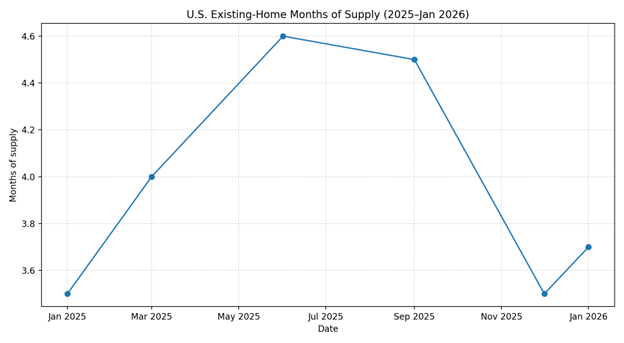
You may see one site reporting Florida home values down year over year, while another shows flat or slightly rising median sale prices. Both can be accurate.
Why?
- Index or “typical value” models attempt to track the same homes over time.
- Median sale prices change based on what sold that month—condos vs. single-family homes, entry-level vs. luxury.
What this means for you: Use multiple sources and focus on your local market before drawing conclusions about your equity.
Figure: Comparing Home Value Indexes vs. Median Sale Price
What a Softer Florida Market Means for Your Home Equity
If You’re Thinking About Selling
A cooling market often means:
- Buyers have more choices
- Homes may take longer to sell
- Pricing strategy matters more than it did during bidding-war years
Your equity outcome depends on more than headline home value:
- Remaining mortgage balance
- Agent commissions and closing costs
- Repairs, credits, or concessions
- Timing—and your backup plan
If You’re Hoping to Refinance
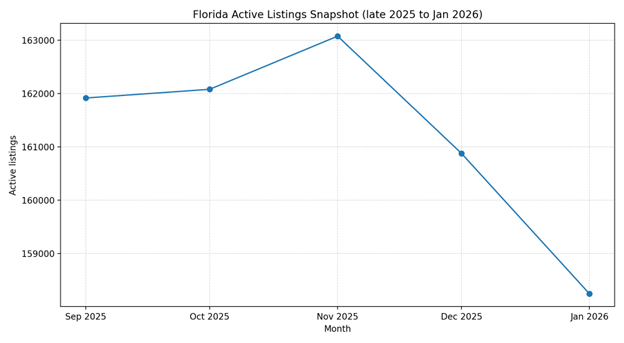
Refinancing can still be possible when values dip, but higher LTV ratios may affect:
- Program eligibility
- Cash-out options
- Pricing or mortgage insurance costs
If You’re Considering a HELOC or Home Equity Loan
A HELOC allows repeated borrowing against your equity. In a softer market, discipline matters. Equity works best as a strategic tool—not a substitute for income or emergency savings.
If You’re Trying to Remove PMI
PMI removal is tied to LTV milestones. If home values soften, reaching those thresholds may take longer—especially if appreciation was part of your plan.
Figure: Equity Uses and LTV Thresholds
What Florida’s Price Shifts Teach Us About Today’s Housing Market
Markets Can Cool Without Crashing
Periods of flat or modestly declining prices often follow rapid growth. Florida’s mixed performance across regions highlights how housing adjusts unevenly—not all at once.
Equity Plans Shouldn’t Depend on Appreciation
If your strategy only works when home values rise every year, it’s fragile. More durable approaches include:
- Building equity through principal paydown
- Maintaining emergency savings
- Avoiding lifestyle spending funded by equity
Equity Is a Tool—Treat It Carefully
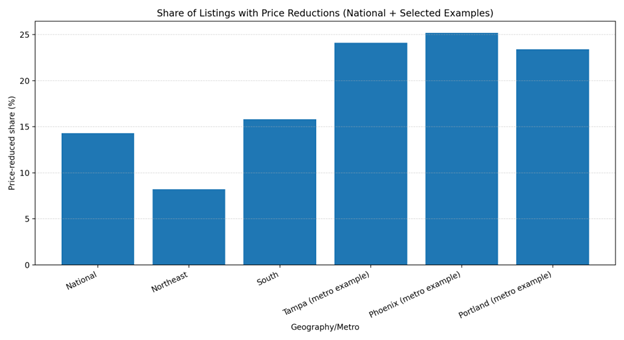
Equity can support refinancing, necessary improvements, or selective debt consolidation. But borrowing against it places your home at risk. Thoughtful use matters.
Figure: Sustainable vs. Risky Uses of Home Equity
Common Mistakes Homeowners Make When Prices Dip
- Treating a single online estimate as absolute truth
- Delaying selling decisions after market conditions change
- Over-borrowing because “values always go up”
- Trying to time the exact market bottom
- Ignoring LTV math when refinancing or planning PMI removal
- Focusing on statewide headlines instead of neighborhood data
A Step-by-Step Roadmap to Protect Your Equity
- Establish a realistic value range using multiple sources
- Confirm your actual mortgage balance—don’t estimate
- Calculate equity and LTV with current numbers
- Define your objective first (sell, refinance, borrow, or monitor)
- Stress-test your plan with slightly higher and lower values
- Review options with a mortgage professional who can model scenarios
Frequently Asked Questions
Are Florida home values really dropping?
Some data sources show declines in certain periods and regions, while others show flat or slightly positive trends. Measurement method and location matter.
Why do Zillow and other sites disagree?
They may track different metrics—typical value indexes versus median sale prices influenced by what sold that month.
What happens to my equity if prices dip?
If your home value falls while your mortgage balance stays the same, your equity shrinks.
Can I still refinance if my value dropped?
Possibly. Eligibility depends on income, credit, loan type, and LTV—not value alone.
Is opening a HELOC risky right now?
It can be if borrowing exceeds your ability to repay comfortably. Understanding terms and risks is essential.
Will value changes affect PMI removal?
Yes. Softer values may delay reaching required LTV thresholds.
Should I wait to sell until prices rebound?
Sometimes waiting helps—but life timing, net proceeds, and local market conditions matter more than one headline.
Final Thought
Florida’s housing market is shifting—but that doesn’t mean your equity story is broken.
The homeowners who fare best in changing markets are the ones who replace guesswork with clarity: realistic home value ranges, accurate LTV math, and plans that work even when appreciation slows.
If you want help understanding what today’s home value trends mean for your equity—and which options fit your goals—I’m happy to walk through it with you.